Interpretation of electroacoustic music
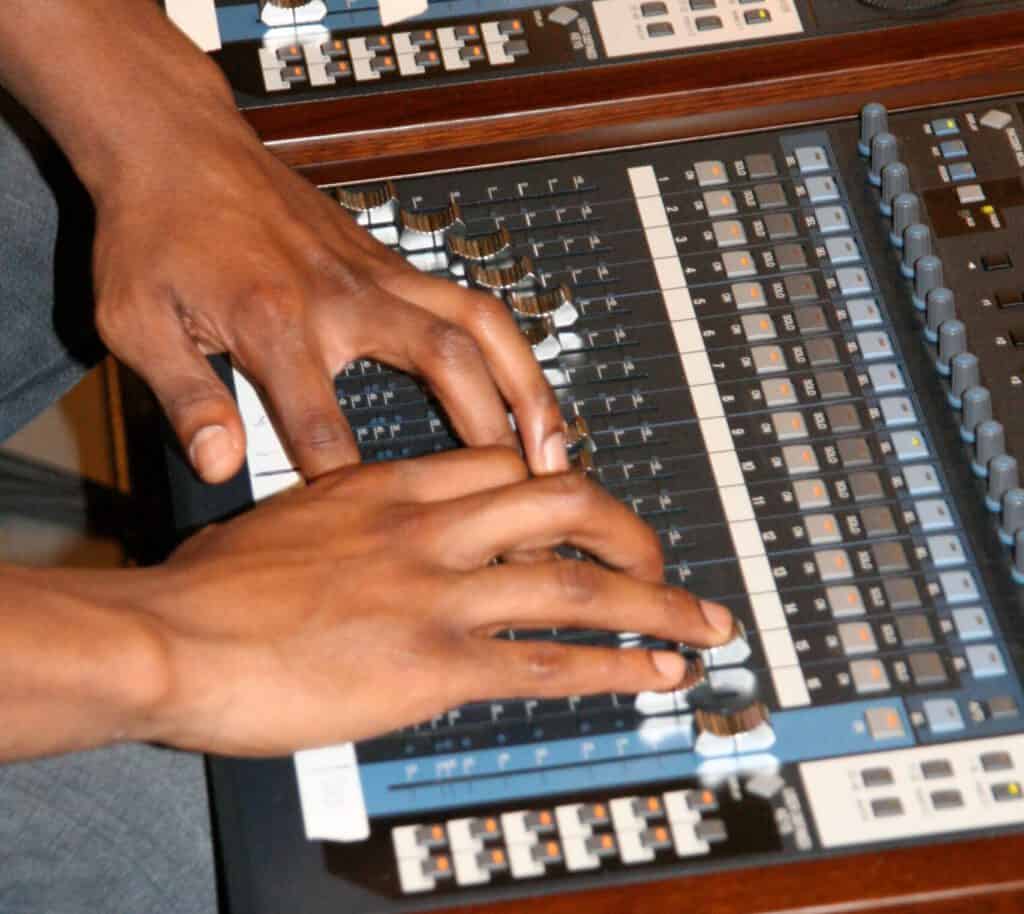
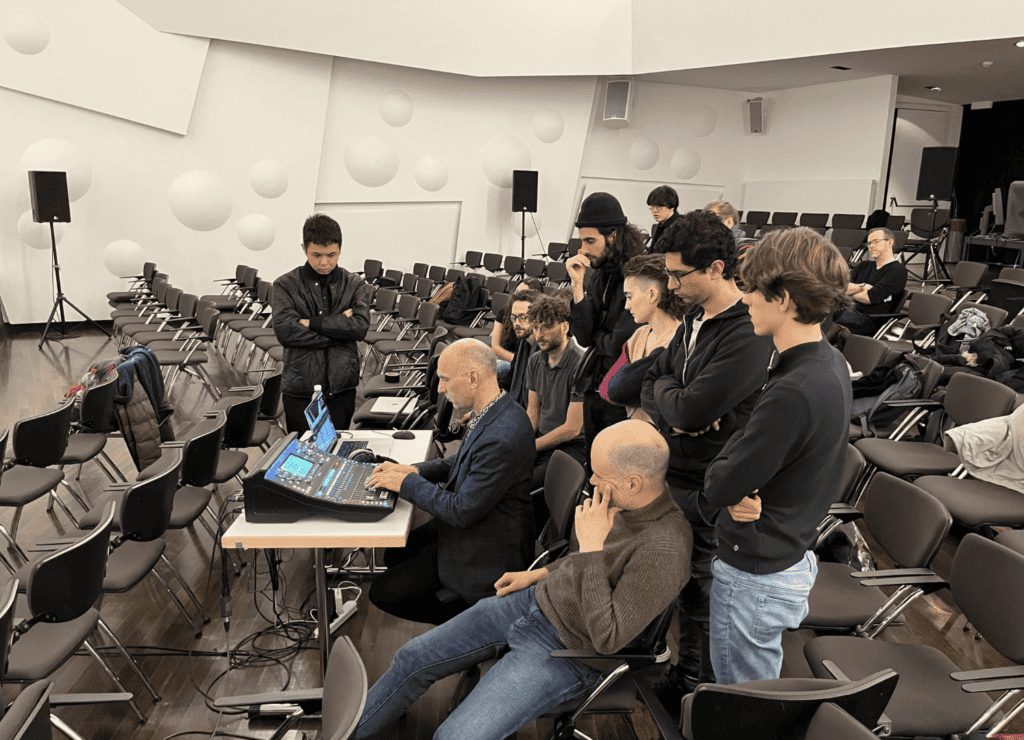
The interpretation of stereo and multichannel electroacoustic works by a skilled and trained performer at the mixing console enriches both the spatial and emotional experience of the music.
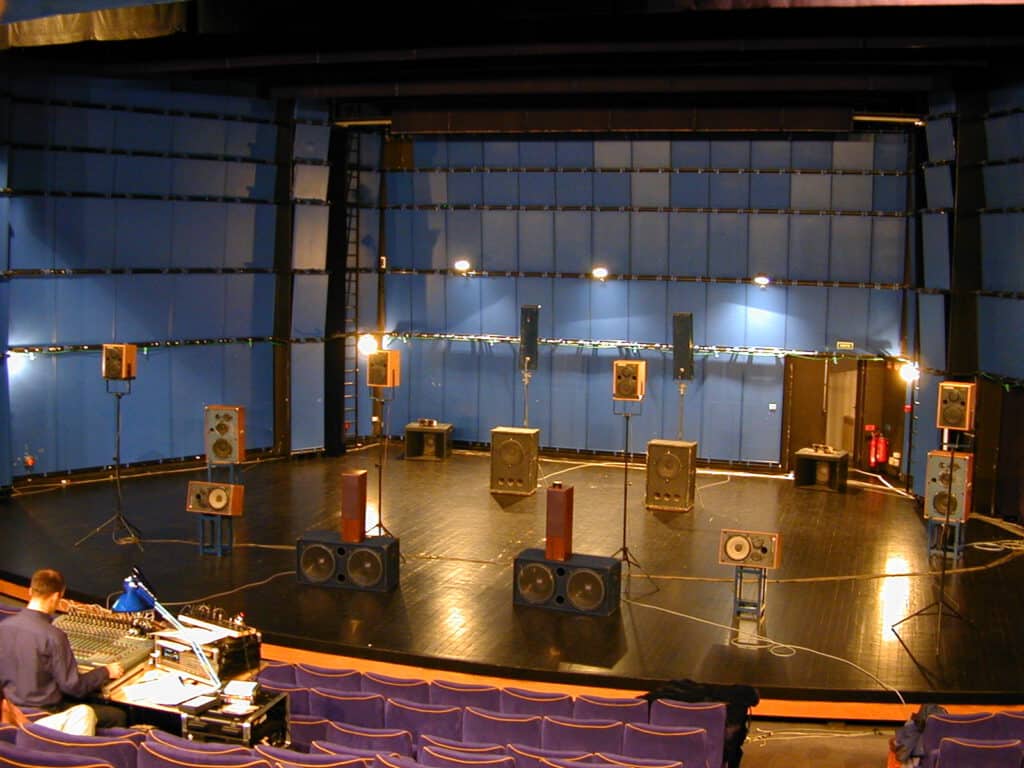
Multi-loudspeaker systems were first developed in the 1970s and have since evolved into various forms tailored to specific interpretative needs—from loudspeaker orchestras, where most speakers are positioned on stage, to fully immersive surround systems, including ambisonics and wave field synthesis.
The term orchestra is fitting not only because of the spatial arrangement of individual loudspeaker-instruments but also due to the distinct registers and timbral characteristics of each speaker. However, the setup of the Acousmonium is not fixed; it can be adapted for each performance.
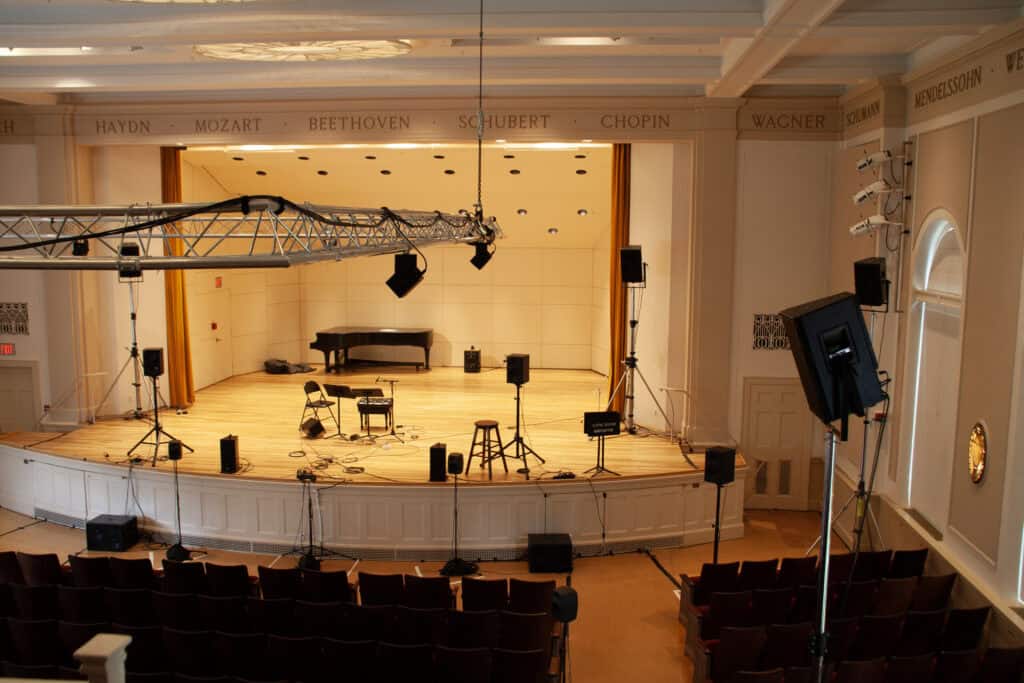
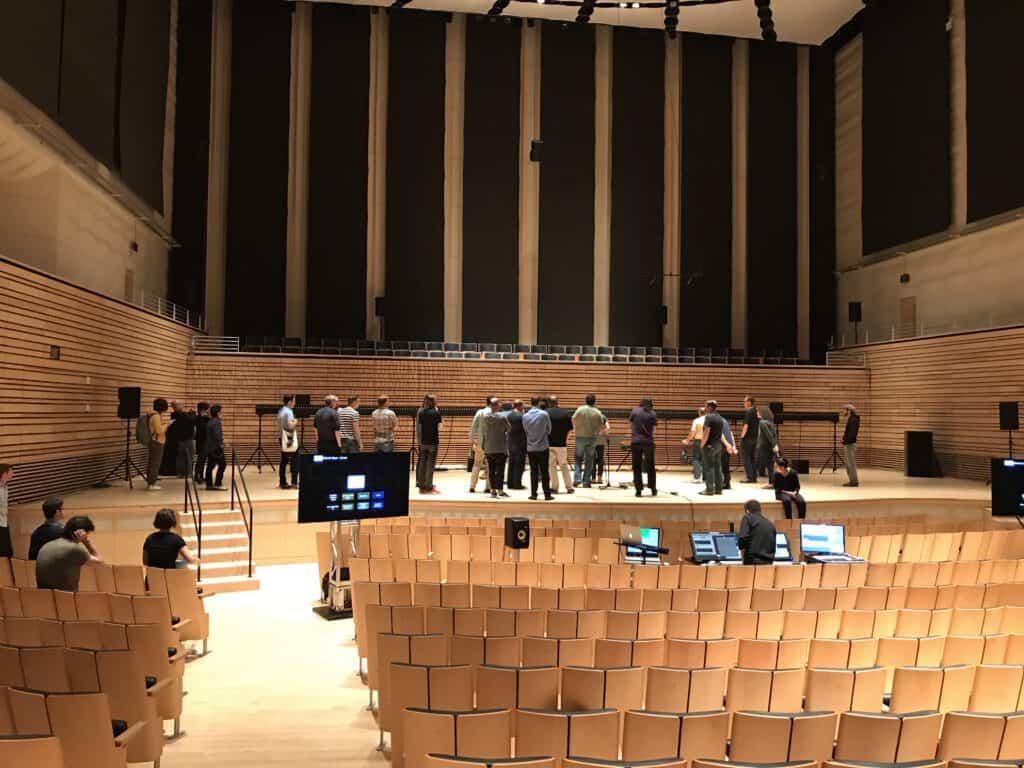
This flexibility allows for continuous experimentation with different speaker configurations. Over the past 30 years, countless concerts have highlighted both the strengths and limitations of various setups—but how can these be assessed objectively?
Every composer has an ideal conception of how their work should sound. But is this ideal based on the acoustic image of the studio where the piece was produced, or is it an imagined, unattainable sound vision? Is it shaped by specific technical standards—such as the quality of tape machines, the unique characteristics of individual studios, or the speakers used for playback? Does this ideal evolve over time alongside the composer’s aesthetic development? Is it a symmetrical sound image, or deliberately asymmetrical? (The latter can offer advantages, as symmetry benefits only a small portion of the audience positioned at the center.) Just as there are countless approaches to sound composition, there are equally many perspectives on the setup of a loudspeaker orchestra.