Poetry as an Encounter
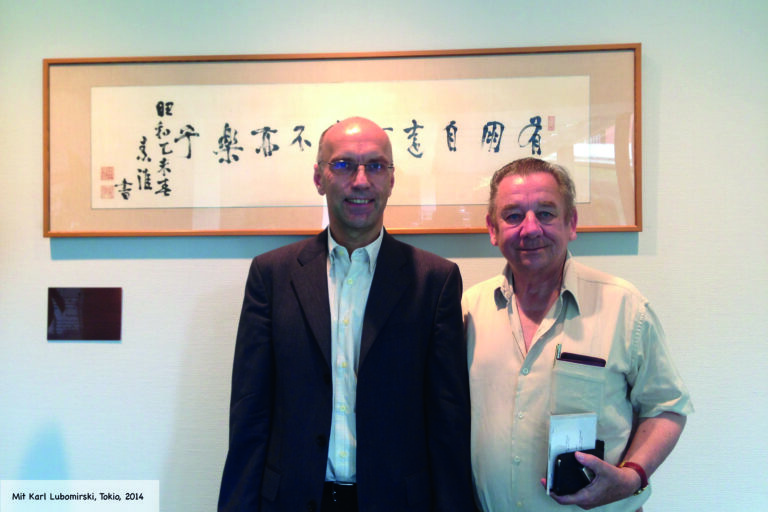
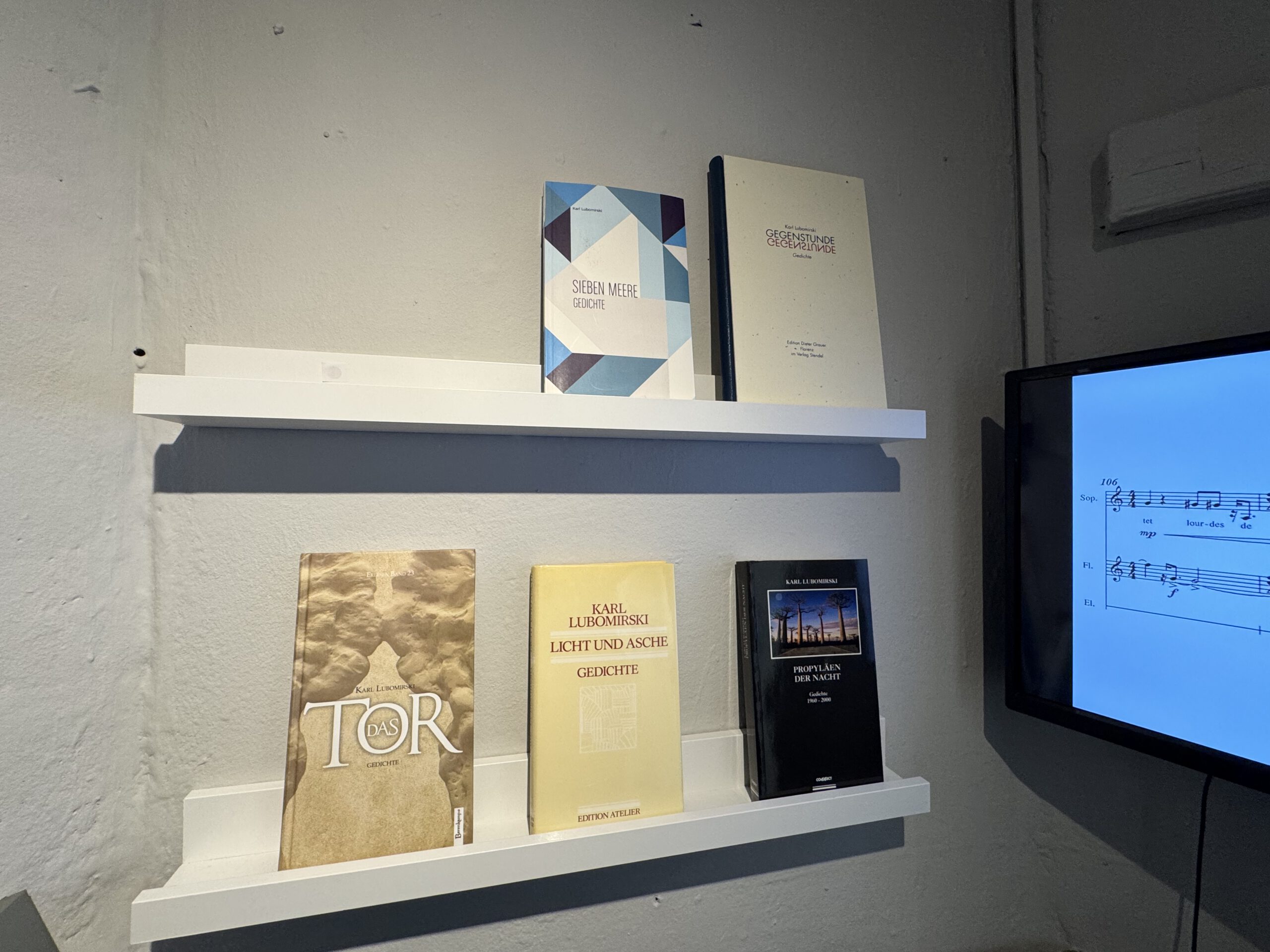
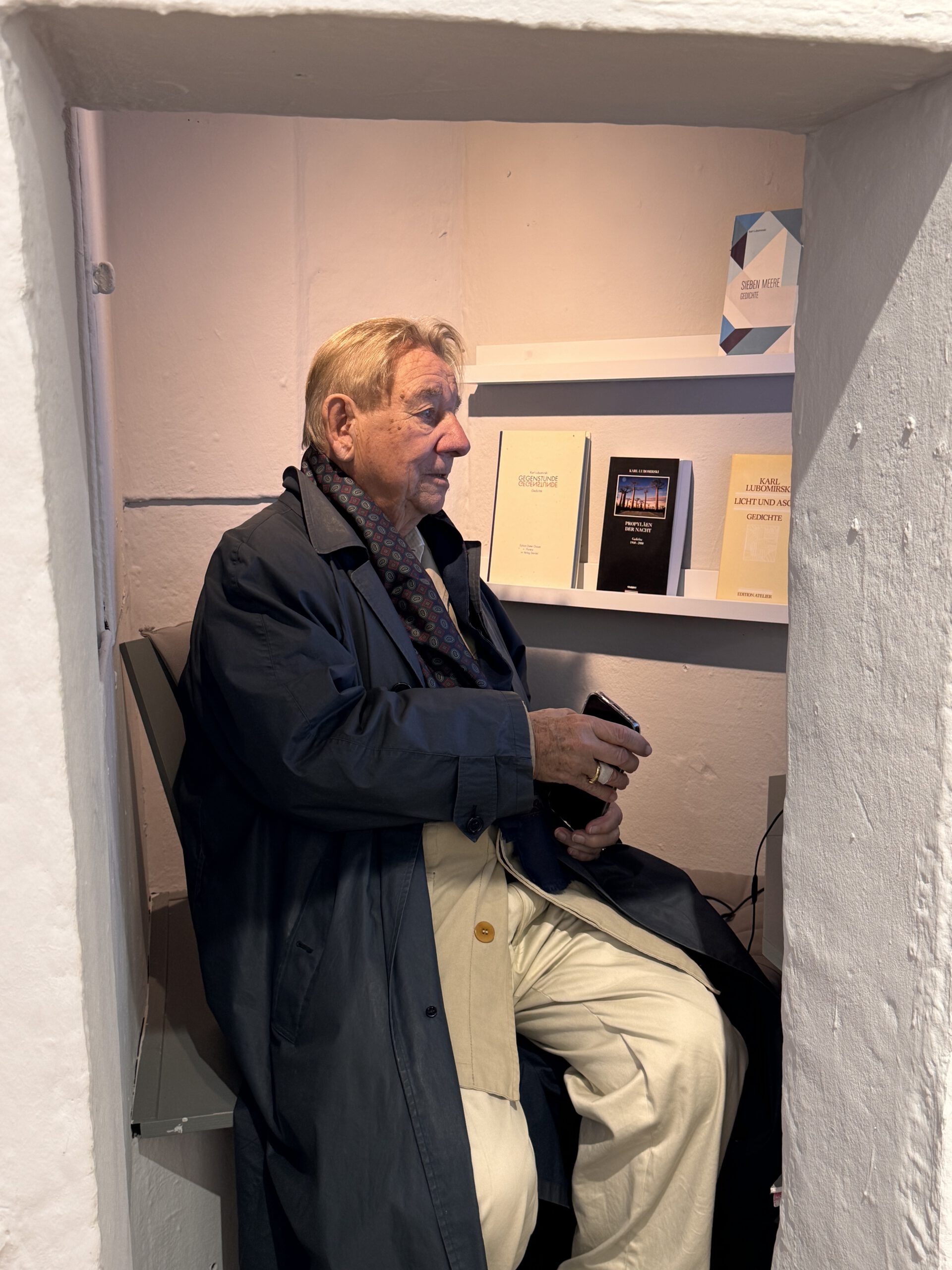
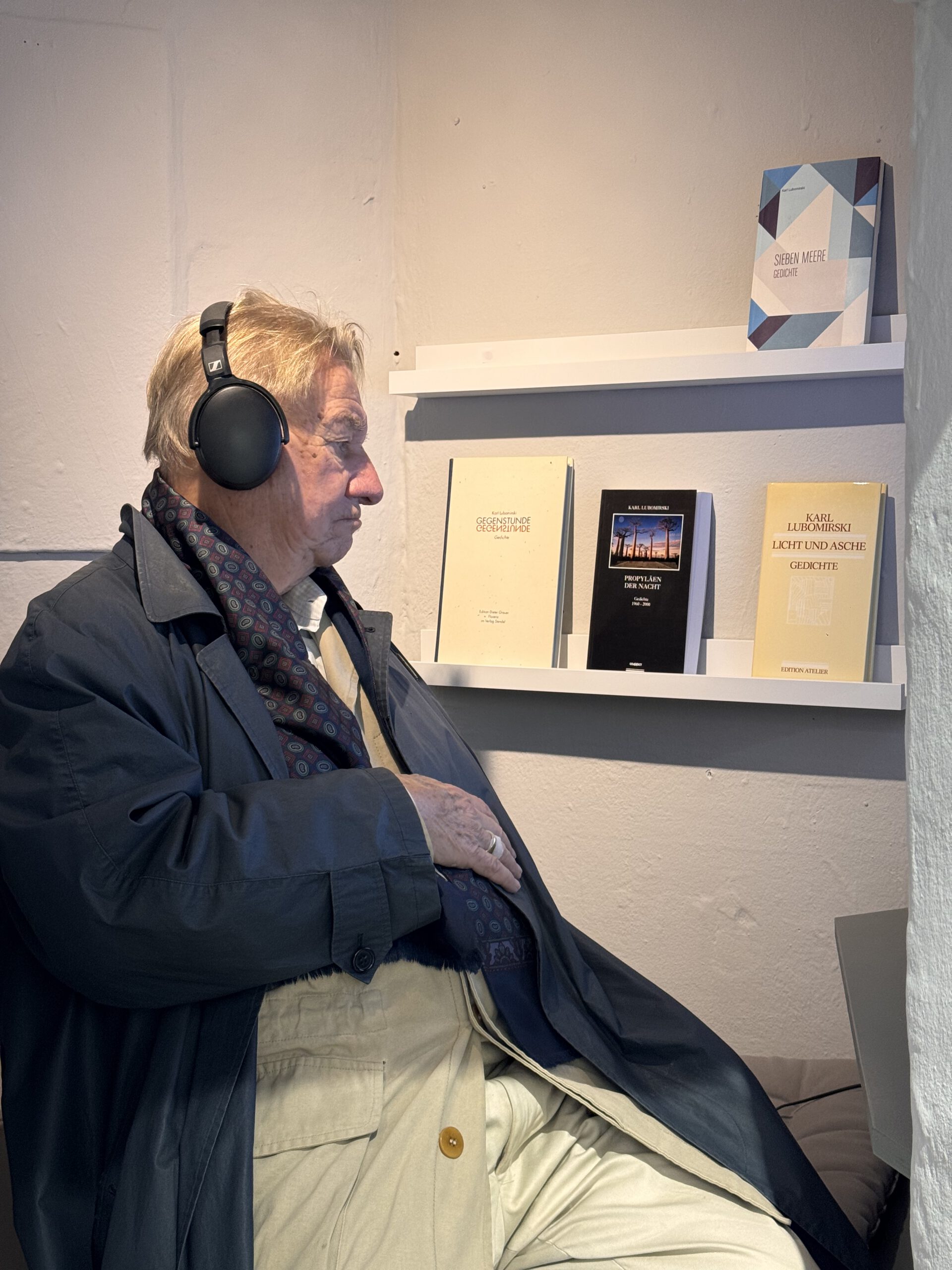
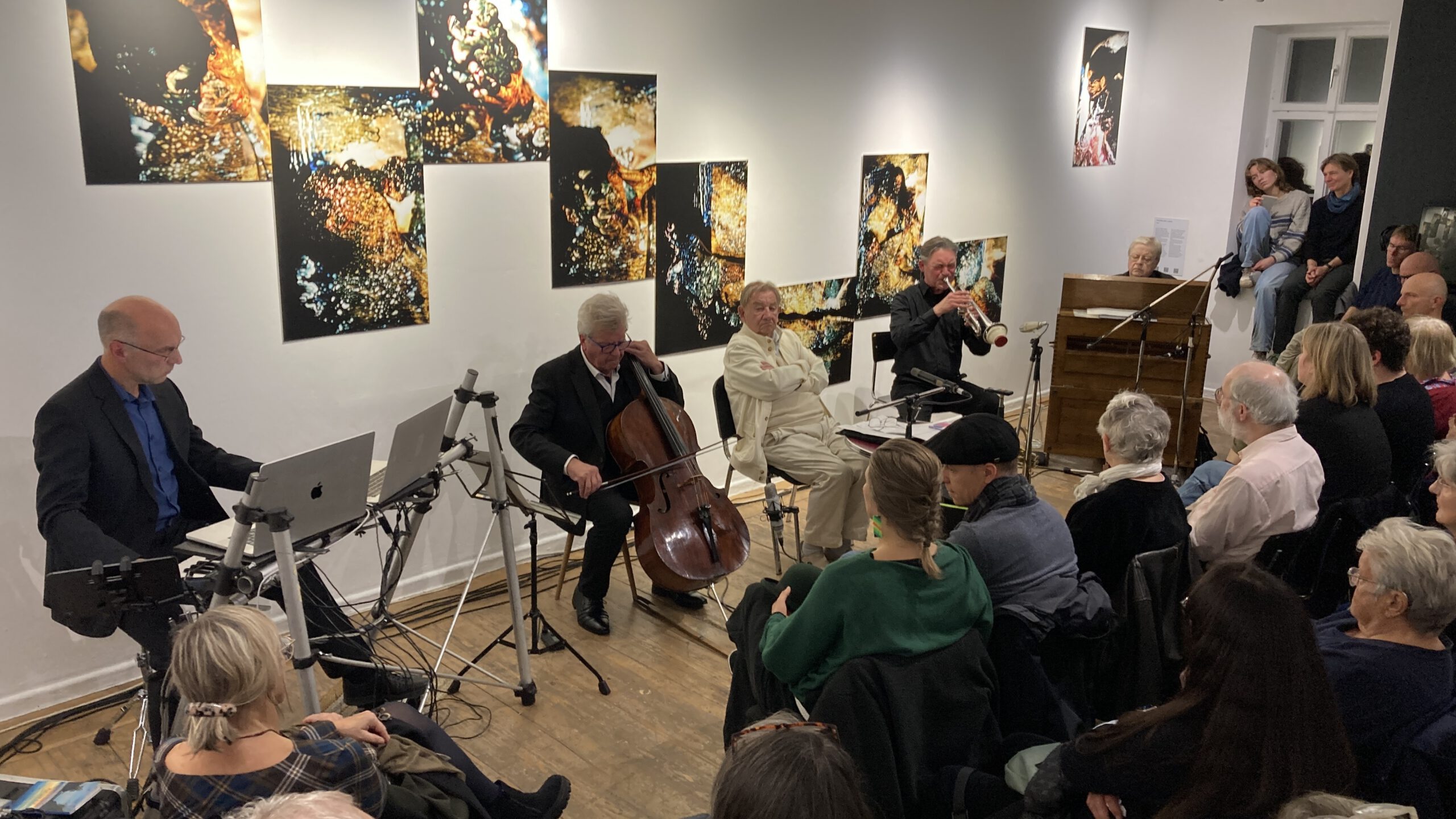
In 1994, the Ensemble für Intuitive Musik Weimar accompanied a reading by Karl Lubomirski. This marked the beginning of a friendship that continues to this day. In his poems, I found an intensity that reminded me of Georg Trakl. His intimate yet restrained delivery moved me particularly deeply. Since then, several of his texts have found their way into my compositions.
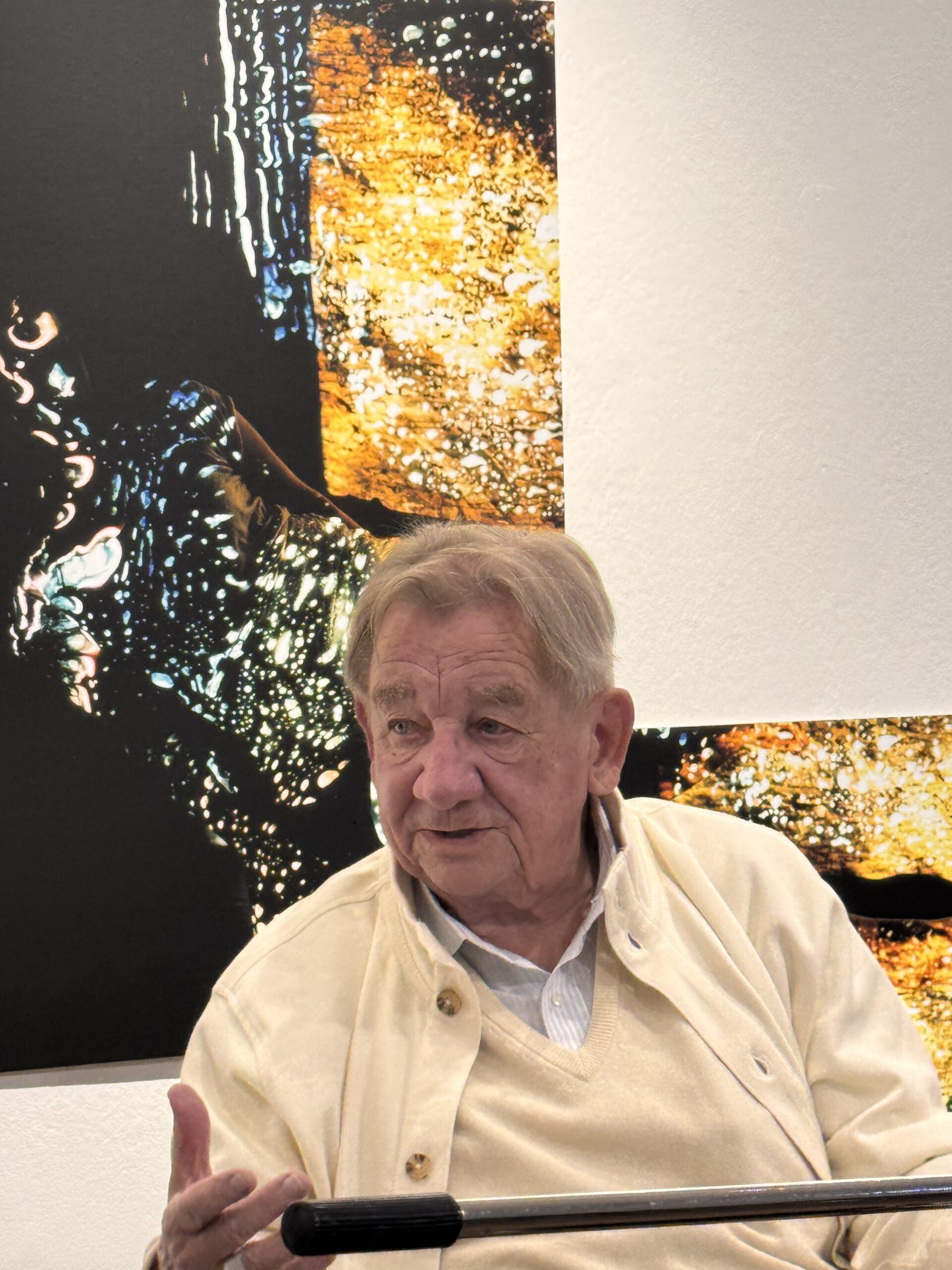
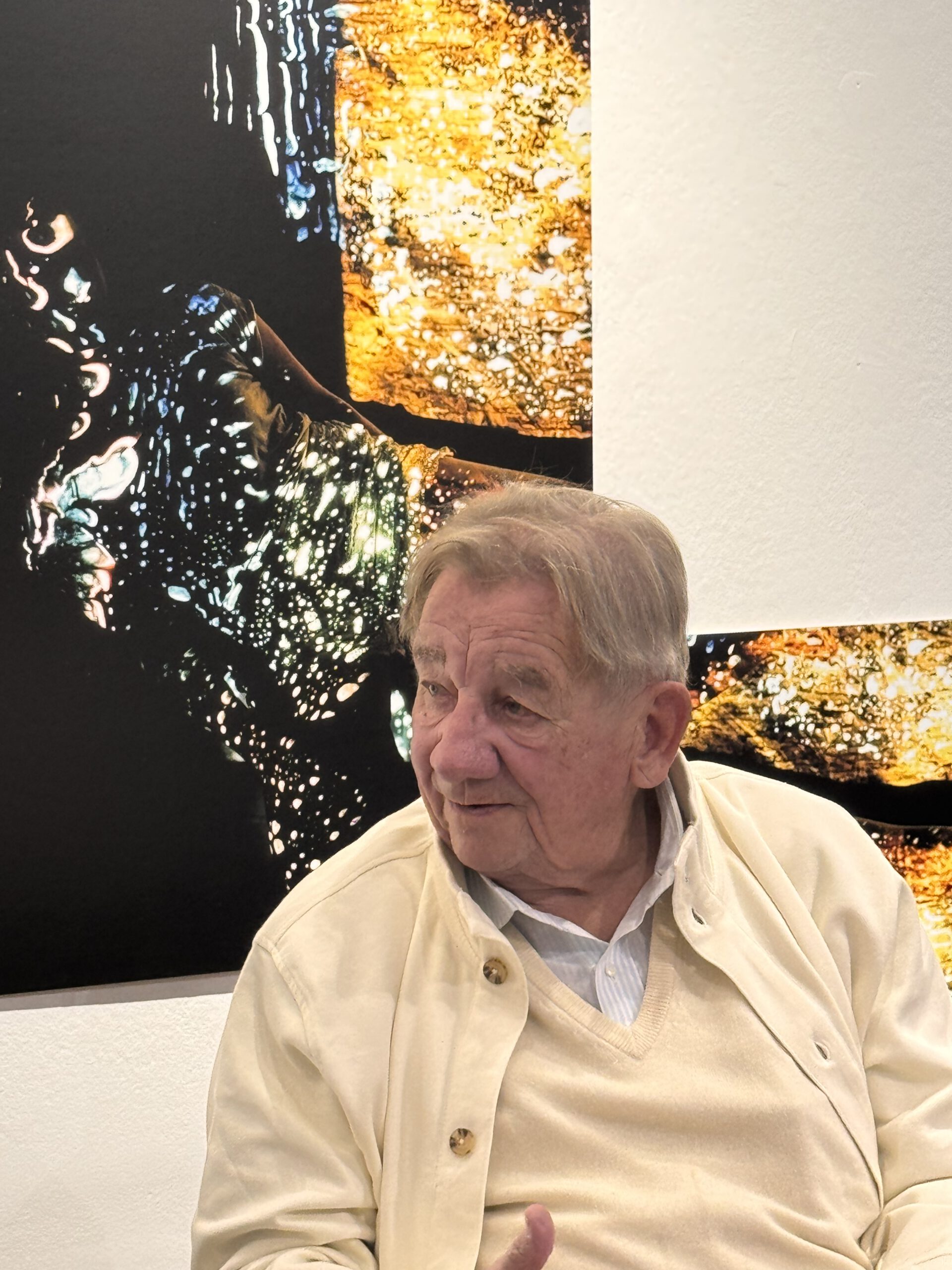
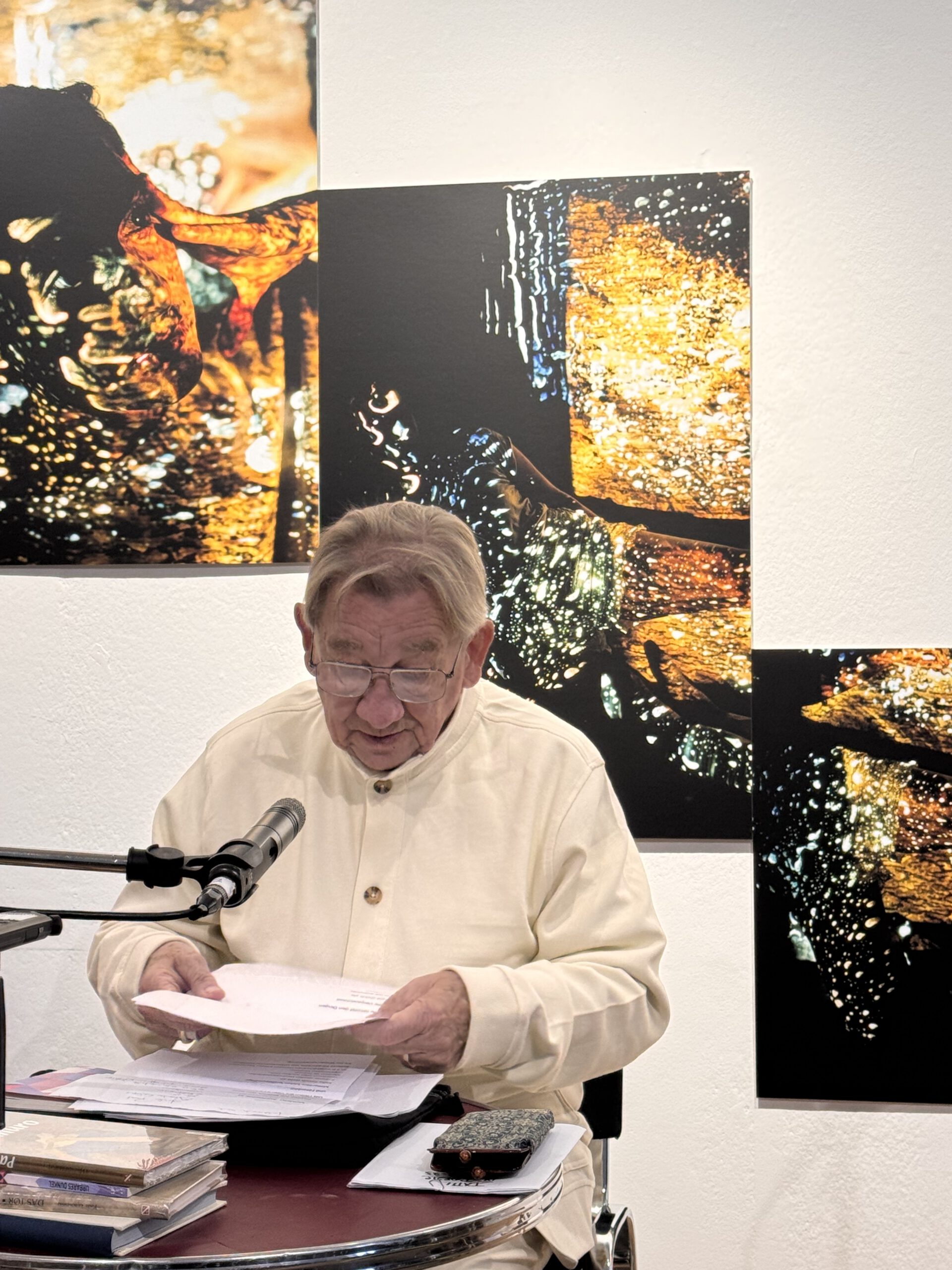
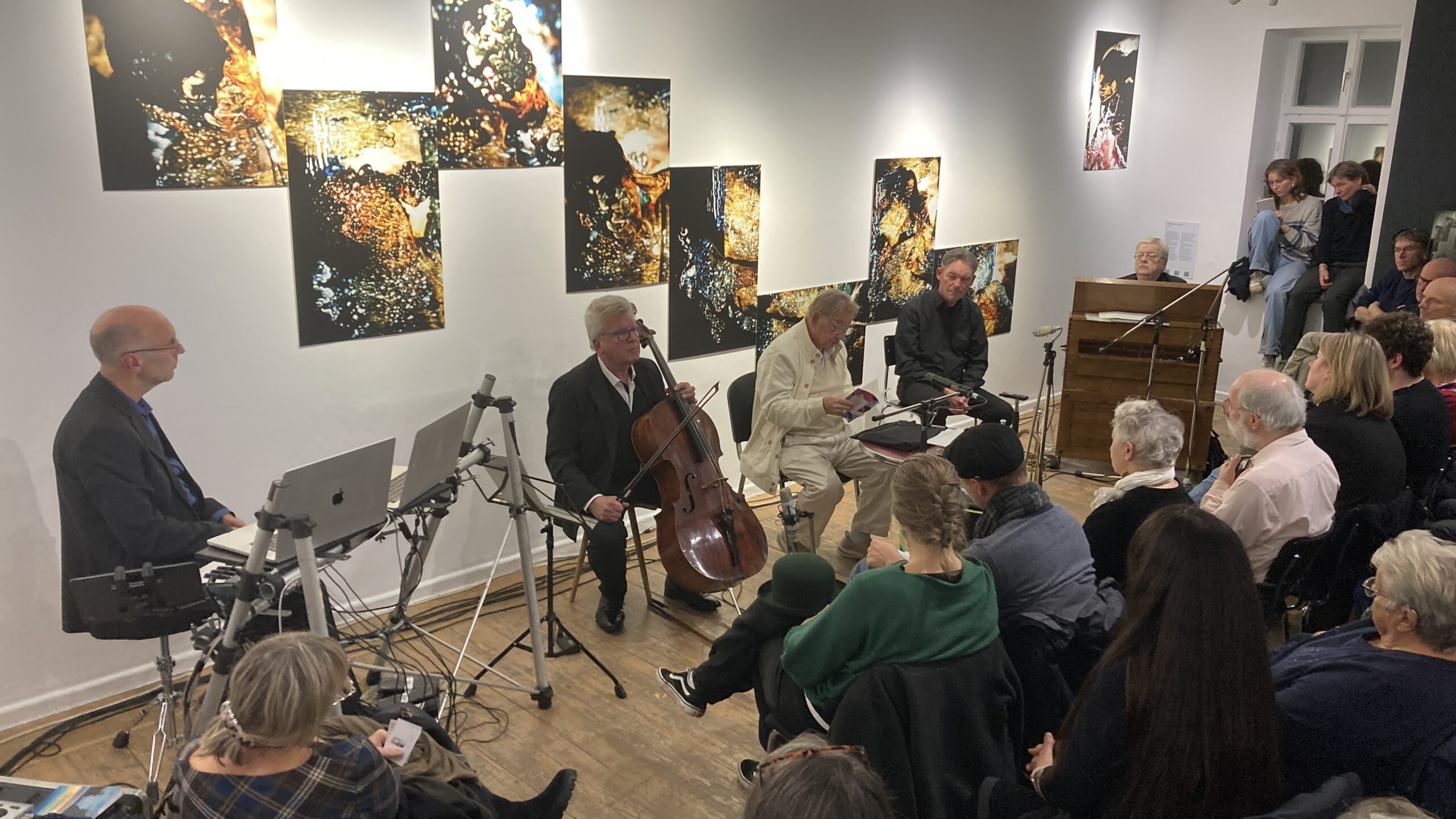
Following another reading together at the Stadtmuseum in 2002, Karl Lubomirski returned to Weimar on October 24, 2026. As part of my exhibition at ACC Gallery, we once again accompanied his texts with the Ensemble für Intuitive Musik. Only afterwards did we discover that the 1994 reading had borne the same title: “Müde wird wer nie durch Wunder geht.” Without realizing it, thirty-two years later we had once again chosen this poem as the title of the event.
Freibrief für einen Traum
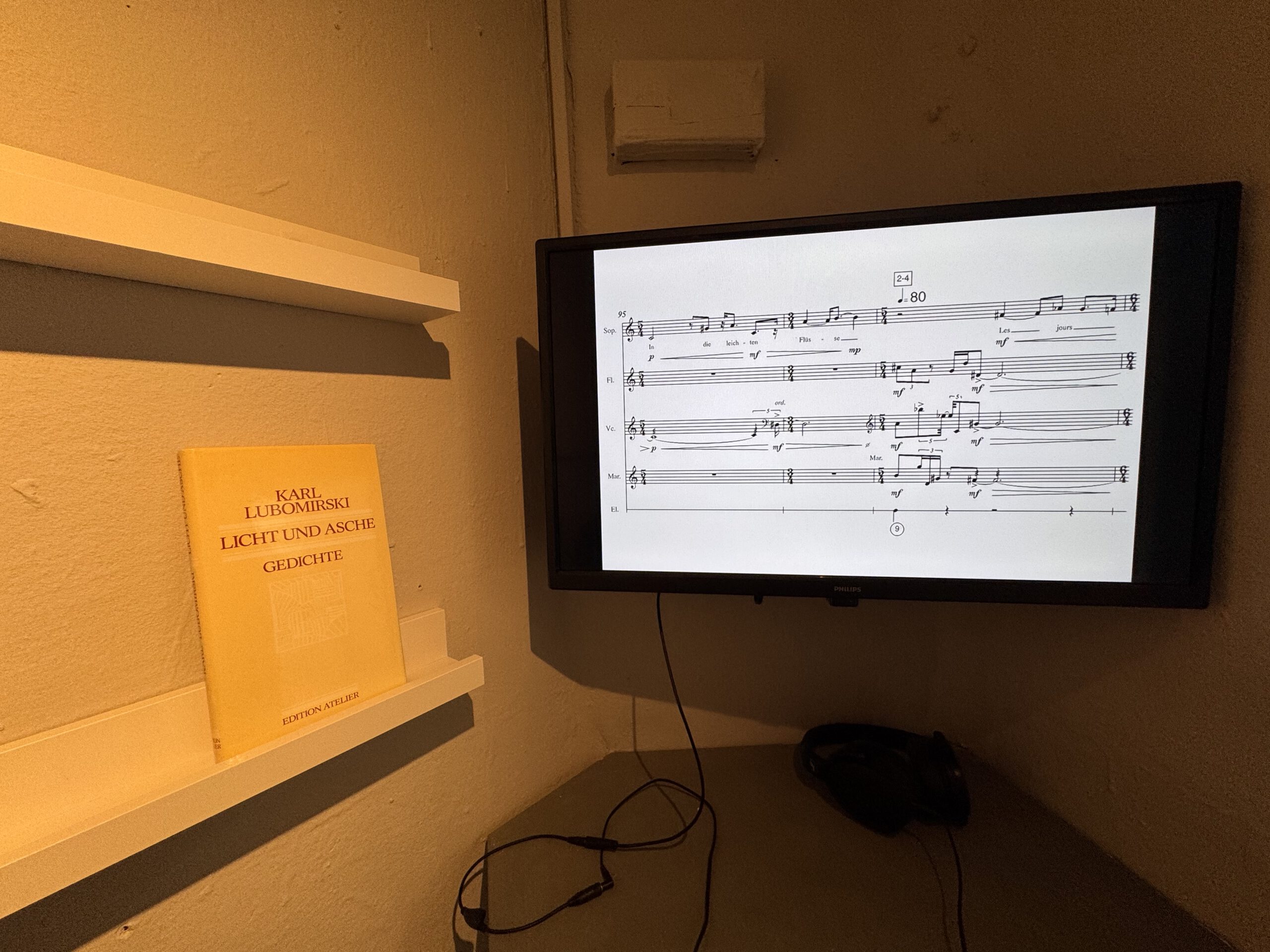
for soprano, flute, cello, percussion, and electronics
Karl Lubomirski’s poem “Es wird später” gave rise to a dialogue between voice, instruments, and electronics. The electronic sounds are derived from recordings of speech, singing, and instruments. For these recordings, I first wrote twenty-five short melodies and a four-part counterpoint, which was recorded using the German text and its French translation.
The resulting sounds on tape unfold in two spatial areas: some surround the audience with sustained textures and sweeping movements through space, while others enter into direct dialogue with the soprano and instruments on stage.
The number five runs through the work as an organizing principle: five main sections are each divided into five subsections. Five five-note chords form the harmonic foundation and also provided the material for the twenty-five melodies.
Work Details and Performers
Year: 1995
Duration: 12 min 30 sec
Studio: IRCAM, Paris
Premiere: January 13, 1996
Soprano: Donatienne Michel-Dansac
Flute: Catherine Bowie
Cello: Antoine Ladrette
Percussion: Jean Geoffroy
Conductor: Pierre-André Valade
••••••••
Karl Lubomirski
Es wird später
Es wird später
Vögel ziehn nach Norden
wieder ohne mich
Am Wegrand kniet die erste
Blume über grauer Krume
stehn schon Lerchen
Tage tragen ihren Lorbeer
in die leichten Flüsse
Über Tempelstufen sonnenschwerer Meere schreitet Blütenstaub ins Leere
Es wird später
••••••••
Il se fait plus tard
Il se fait plus tard
Des oiseaux vont vers le nord
sans moi de nouveau
Au bord du chemin la première fleur s’agenouille
au-dessus de la croûte grise
des alouettes déjà
Les jours portent leur laurier
dans les rivières légères
Sur les marches du temple de mers lourdes de soleil
s’avance vers le ciel le pollen
Il se fait plus tard
Translation:
Jacques Legrand