(re)calling the birds
for violoncello and electronics
Year: 2026
Duration: 14:00 min
Studio: Harvard University Studios for Electroacoustic Composition
Dedicated to: William Teixeira
Date of first performance: March 25, 2026
By: William Teixeira
Place: Federal University of Mato Grosso do Sul
In 2023, I experienced a rare immersion in unmediated nature in the Pantanal, Brazil. At dawn and dusk, we listened to slow transitions between night and day: bird calls and animal voices emerging from multiple distances, overlapping within a space of striking depth.
This work does not recreate that landscape. It unfolds through acts of recalling and calling—fragments remembered, presences summoned, sounds appearing and dissolving within an expanded sense of time.
The violoncello does not imitate birdsong. Its motifs are newly composed figures—creatures of its own. Set against field recordings from the Pantanal, the instrument enters a fragile dialogue with a living acoustic environment. At times it blends; at times it stands alone—a solitary, vulnerable voice, reminding us of our impact on the environment. At certain moments, the cello’s sound turns into an outcry: not a depiction of a specific bird, but a heightened human gesture within an increasingly threatened acoustic world.
Score
Electronics
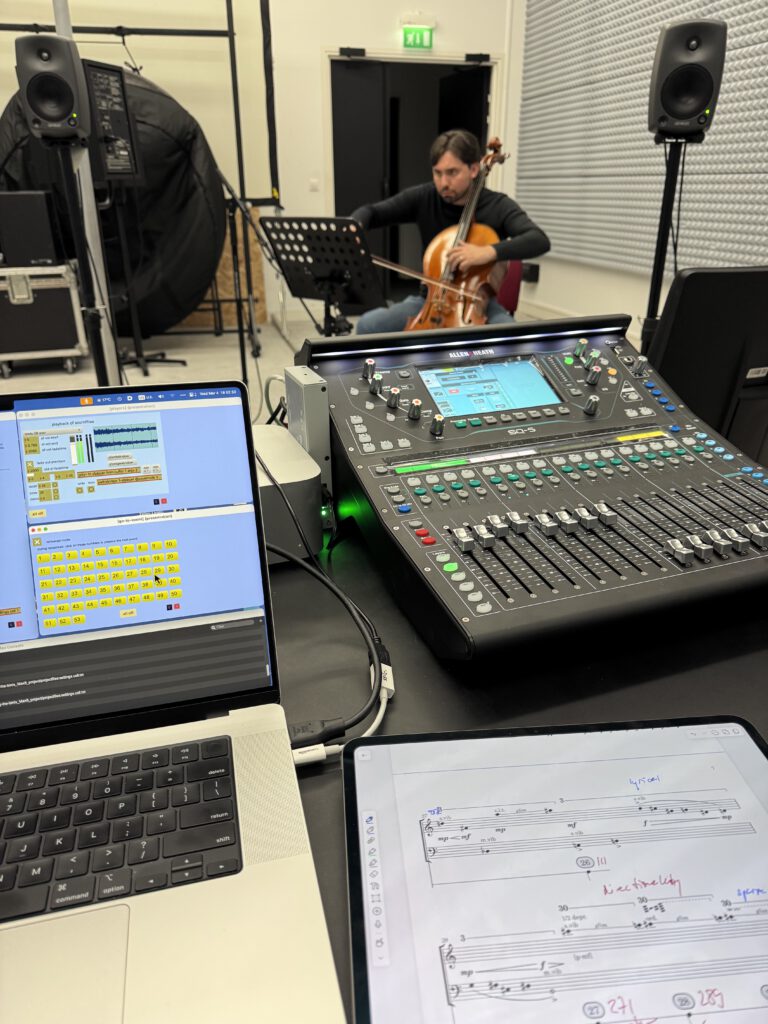
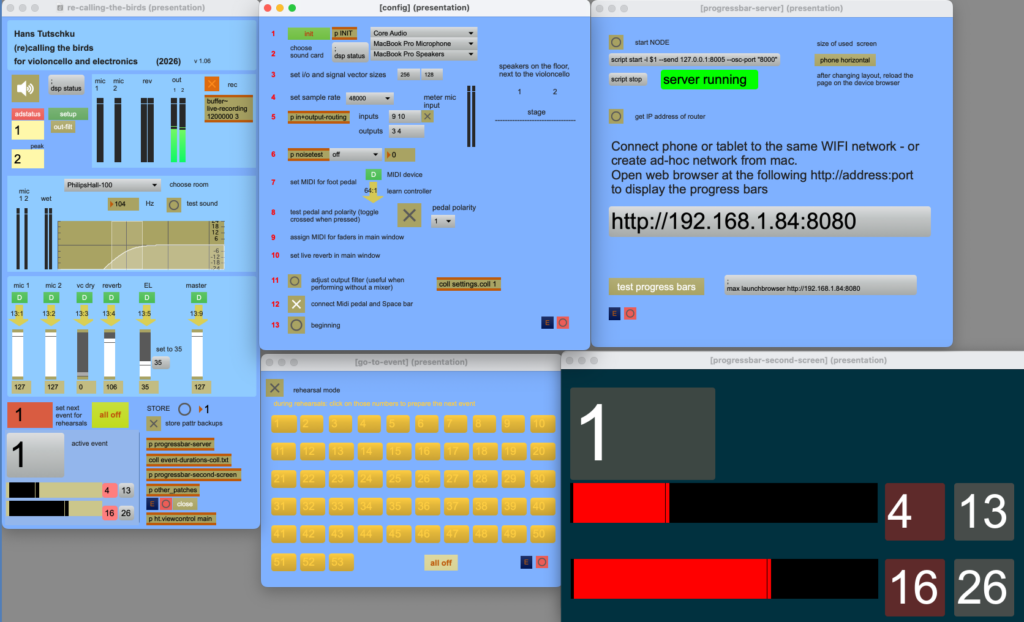
The electronics for this work are two-channel (stereo) and are realized as a Max/MSP project for macOS. There is currently no Windows version available. The cellist advances the indicated events in the score by pressing a MIDI sustain pedal. The composition uses sound file playback only; there is no live processing of the cello.
Nevertheless, the cello should be amplified through the same speakers as the electronics. These speakers should be placed in close proximity to the performer in order to create a compact sound space. In acoustically dry environments, the Max project provides the option to add reverberation to the microphone signal.
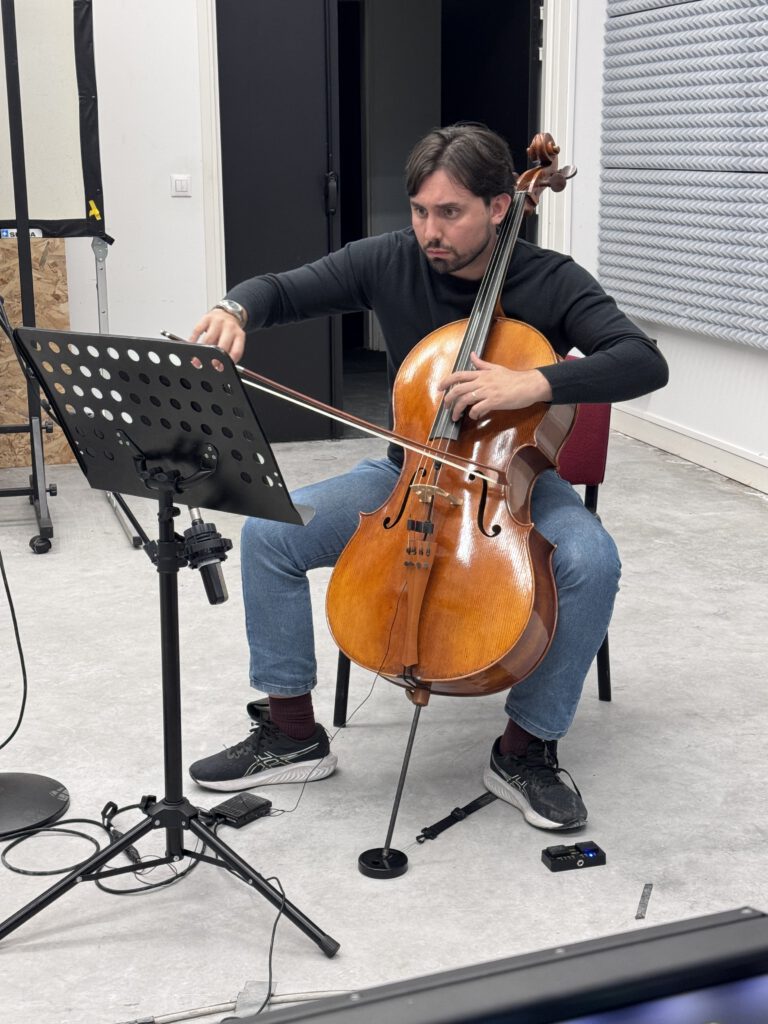
rehearsals with William Teixeira, March 2026