Lisbon Project: A fish in the jacket
Choreography Joachim Schloemer
Stage Design Frank Leimbach
Costume Design Frank Leimbach
Light Design Hermann Münzer
Music Hans Tutschku & Michael von Hintzenstern
Dancers Nadine Bagnoud, Natascha Hahn, Clivia Maridjan Koop, Maria Joao Pires, Rosemary Porte, Sónia Rocha, Ingrid Weisfeit, Johannes Kasperczyk, Hans-Georg Lenhart, Grayson Millwood, Fabio Pink, Manolo Risso 0 Ricci, Rodolfo Seas Araya, Graham Smith, Norbert Steinwarz
Guest Performances 02/1998 - Hebbel-Theater, 04/1998 - Bregenzer Frühling
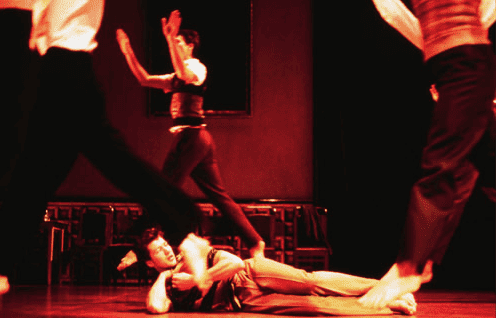
The 75 minutes masterpiece is reflecting a story about Lisbon as the 'underwater city' but there is no water on stage, instead there is a fish.
The romantic city remains intact after the completion of the Second World War, only natural calamities had affected the city, like the enormous earthquake in the 18th century. The Lisbon story has been compiled together with musicians Hans Tutschku and Michael von Hintzenstern in the music city' streets and cafes for the dance and music composition.
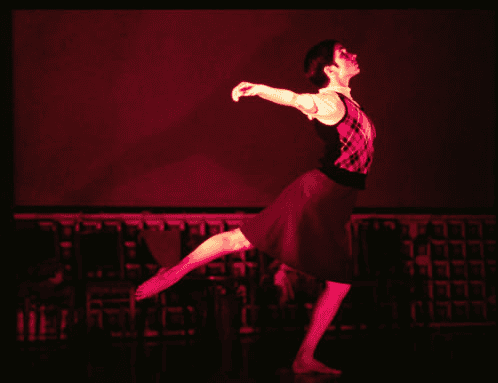
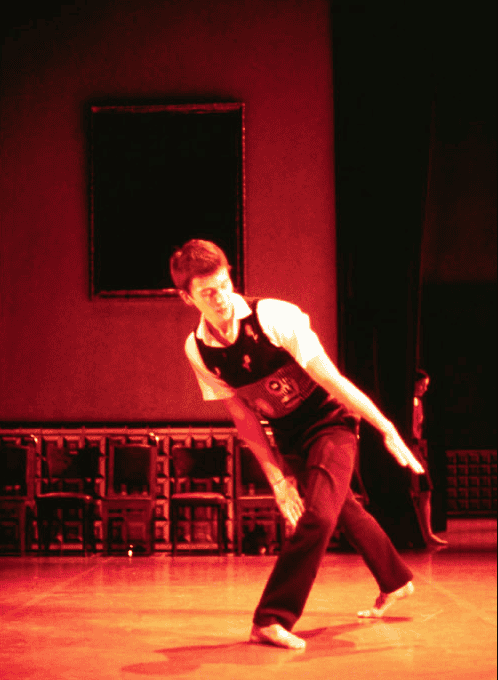
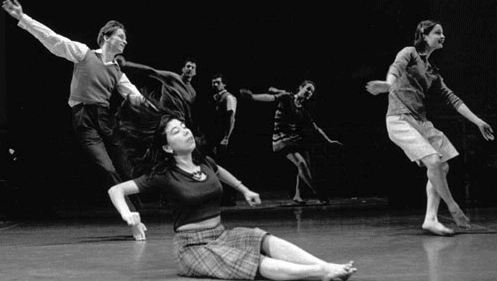
The dynamic, fluid and beautiful dancing performance accompanied by romantic rhythme of Portuguese musical background has won the heart of all spectators in the Jakarta Art Building. The dancers, women and men alike were dancing skillfully, whole-heartedly as a group or sometimes as an individual, where they could freely expressing their role.
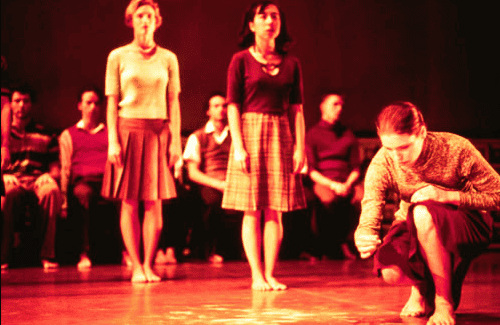
The meeting of some ladies and gentlemen in a place nearby the sea exposed with great nostalgia and sometimes melancholy, but showing also a happy moment, knowing that they will part but soon they shall meet again.
As Schlömer said by quoting Novalis, this choreography of Lisbon Project lies somewhere between the questions ' where do we come from' and 'where are we going', which have a deep philosophical meaning: what is life? The audience should search the reply in this meaningful choreography.
The most important thing, this evening performance of Dance Theatre of Basel has given a great satisfaction to Jakarta's audience, with no less than five long ovations before the curtain definitively closed, at the end of the performance. The sincerity of Joachim Schlömer and of course the whole dance ensemble has been proved in a high professional manner. Congratulation Schlömer and all the crew and dancers of Dance Theatre Basel!
Critics write:
"Joachim Schlömer's 'Lisbon Project' for the Basel Thatre contains some of the most beautiful ensemble dancing the choreographer has ever created; never before has Schlömer produced such fluid, sculptural and meaningful choreography."
"In one of the most beautiful and typical scenes of the piece, the dancer Norbert Steinwarz keeps on trying in vain to get off with a pretty colleague. He hopefully presents his idol with a green balloon. As she lets it go and scornfully goes off with someone else, Steinwarz for a moment, doesn't know whether he should catch hold of the balloon or the woman; by the time he has got up onto a chair the balloon is out of his reach, and he has lost both the woman and the balloon."
Jochen Schmidt, Frankfurter Allgemeine Zeitung, 26th January 1998
"Schlömer uses the themes of saudade, melancholy and the demise of traditions in a modernized society."
Brigitte Guggisberg, tz, 19th January 1998
Berliner Zeitung, February 2, 1998
A Premonition – But of What?
A Wonderful Beginning: Schloemer’s "Lisbon Project" Opens the Dance Winter at the Hebbel Theater
Originally, it was also meant to be a critical examination, but then the city turned out to be simply too beautiful. Lisbon, says choreographer Joachim Schloemer, appears to him like an untouched palace, an unscathed fortress. There are no bullet holes or other traces of past wars. Only natural forces have ever been able to leave a mark on the city.
Time has passed in a strange way here, and yet the past is as present in Lisbon as in no other European metropolis. The people, Schloemer notes, still call the square where King Manuel I’s palace stood until the earthquake of 1755 "Palace Square" to this day. Death, he suggests, is not taken so seriously in Lisbon, because here, the past is not destroyed—it continues to exist in a state of decay.
And It Lets It Happen
Under the somewhat dry working title Lisbon Project, Schloemer, along with his Basel-based company, stage designer Frank Leimbach, and composers Michael von Hintzenstern and Hans Tutschku, set out to trace this fleeting sense of premonition, this gentle not-quite-being-in-the-world that governs both the city and its people. At some point, each of the fifteen dancers stands alone on stage, jumping, turning, raising their arms. But then there is a short circuit, and the power goes out, or the music stops, or they stumble, or they simply do not know—how to dance? A powerful force surges through their bodies, a sense of something—but what? They stand helpless, stretch their arms wide, and let it happen.
Meanwhile, in the background, dancers glide past in synchronized movements, while muffled roars and rushes emerge from the speakers. Then the next fado begins, and a shy, enamored couple takes to the floor. Even the most unusual occurrences unfold with the greatest casualness. Yes, yes, the people seem to think, momentarily irritated—though the irritation never truly takes hold. That, it seems Schloemer is suggesting, is why the unusual, the wonderful, is allowed to happen.
Following the world premiere of the Lisbon Project two weeks ago in Basel, some critics noted that while there were magnificent ensemble dances, the piece lacked dramaturgy. Now, as the opener of the Dance Winter festival at the Hebbel Theater, Schloemer has reworked his Lisbon impressions. He considers this a second premiere, he says. Some sections have been shortened, others rearranged. The structure may now seem more compelling, the piece more condensed toward its end—but a dramaturgy, as conventionally understood, still does not exist.
And it cannot. Schloemer follows the words of poet Fernando Pessoa, which he has printed on the first page of the program booklet, and which capture the essence of Lisbon’s spirit:
"I am nothing/I will never be anything/I cannot even want to be anything/Apart from that, I carry within me all/The dreams of the world."
It is this indeterminacy, this feeling of dreaming—rather than the dreams themselves—that Schloemer seeks to bring to the stage. Composers Tutschku and von Hintzenstern have provided him with a wealth of old and new fado music, recorded on crackling, scratchy shellac records. Sometimes, the crackling and scratching grow louder and louder, pushing the music aside, opening up gaps of silence. A colorful papier-mâché fish on two legs strides across the stage, a man wrapped in bast fibers flails wildly. It seems as though Frank Leimbach sourced all the costumes from a Lisbon clothing shop tucked away in a side alley, where brown-purple striped knit dresses and colorful sweaters with plastic hearts at the neckline are stacked high on shelves.
Unlike his travel piece Echo of the Stones, inspired by the Scottish Highlands—where tradition and modernity collide, staring back at the audience as something foreign, cold, and hermetic—the Lisbon Project, despite all its melancholy, is enchantingly light. "It is a romantic project," says Schloemer. Whether dark and cold or bright and harmonious, in either case, Schloemer proves himself a master of the poetic. A wonderful opening for Dance Winter at the Hebbel Theater.
Michaela Schlagenwerth