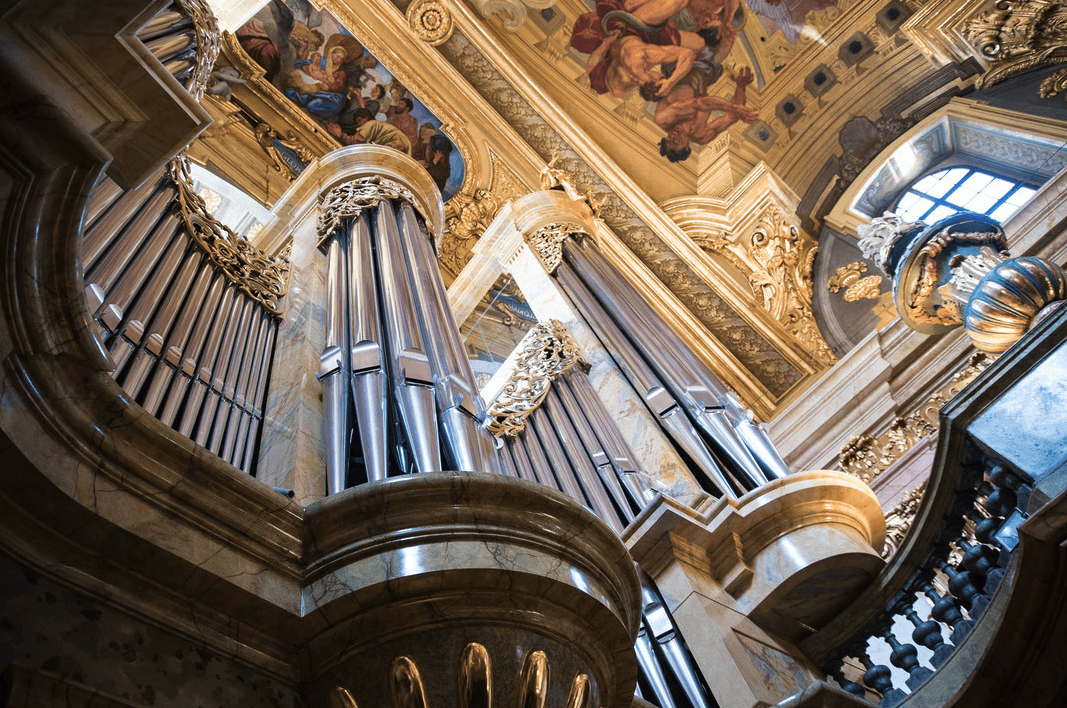
Cinq espaces du crépuscule
In cinq espaces du crépuscule (five Spaces of Twilight) the sound of the Späth organ of the University Church of Vienna unfolds in the truest sense of the word "ent-faltet". A few days before the organ dedication, Hans Tutschku and Michael von Hintzenstern spent nights in the Vienna Jesuit Church to explore the unique tonal possibilities of the new instrument. In doing so, they experienced with impressive immediacy the revived sound world of the French organ builder Aristide Cavaillé-Coll, who profoundly shaped the organ landscape of 19th-century France. In their "Organ Conferences" they elicited from the enchanting instrument a wealth of extraordinary sounds of the 21st century, which were recorded and further processed in the studio. In the process, a connection also emerged between the French organ sound and that of the Peternell organ in Denstedt near Weimar, on which Franz Liszt experimented in 1860. The live electronics transform the original sound of the organ and also combine it with recorded and pre-composed layers.
The work is divided into five sections that provide a formal structure for improvisation between organ and electronics.